We are taught, often without words, that our worth comes from motion.
Doing.
Producing.
Improving.
Stillness can feel suspicious. Rest can feel earned only after exhaustion. Simply being can feel like a failure to participate. Applied Zen invites us to look again.
There is a quiet strength in allowing yourself to exist without justification or momentum.
Simply being does not mean disengaging from life. It means releasing the constant pressure to prove that your presence is deserved. It means letting go of the belief that you must always be on your way to something else.
In Zen Buddhism, presence is not measured by output. Awareness does not require achievement. The breath does not ask permission to rise and fall. It simply does.
When you allow yourself to be, something settles. The body softens. The nervous system receives a signal that it does not have to perform. Attention becomes less strained because it is no longer being directed toward an outcome.
Being is not passive.
It is receptive.
At Enlightened Life Fellowship, we speak of Applied Zen as a practice rooted in real life. Real life includes pauses. Gaps. Moments with no clear purpose. These moments are not empty. They are spacious. They offer room for awareness to stretch without demand.
Strength is often misunderstood as effort. But effort alone exhausts. The strength of simply being comes from endurance. From the ability to stay with yourself without distraction or escape.
This kind of strength does not announce itself. It does not impress. It does not accumulate praise. It stabilizes quietly.
When you stop justifying your existence, you stop arguing with the moment. You are no longer negotiating your right to be here. You are here.
This can feel unfamiliar. The mind may rush in with questions. Shouldn’t I be doing something. Shouldn’t I be improving this moment. Zen does not fight these questions. It allows them to pass through without answering them.
Presence does not need defense.
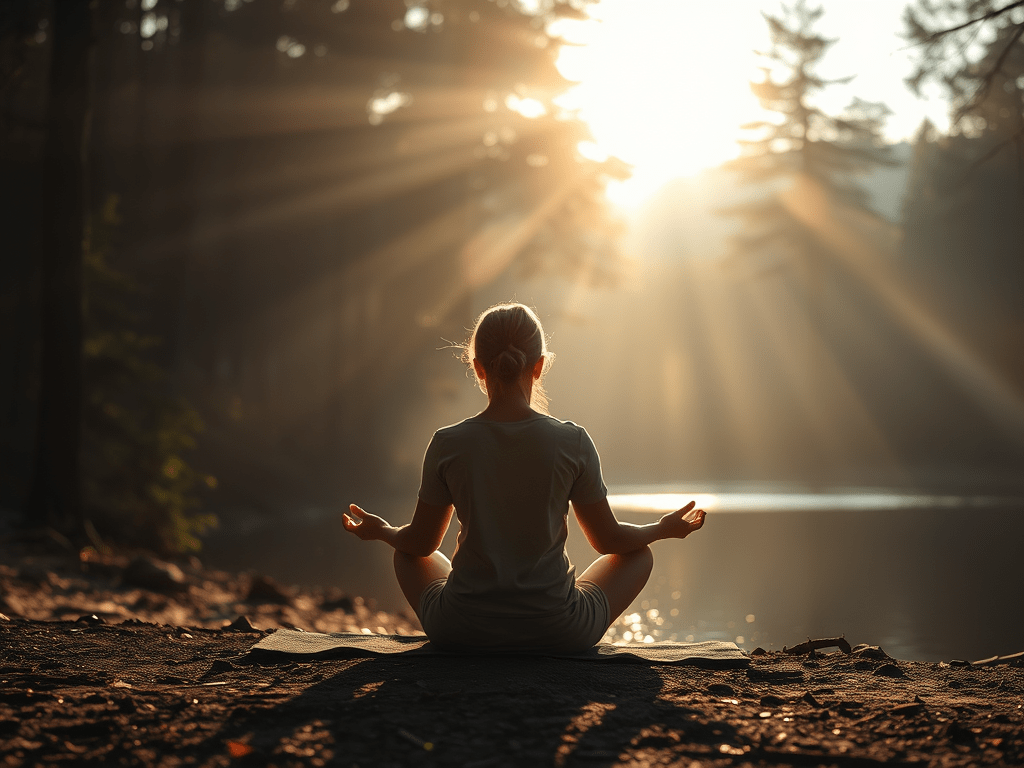
In meditation, simply being looks like sitting without trying to fix the breath. Without trying to control thoughts. Without trying to manufacture calm. You notice what is happening and you remain.
Remaining is strength.
In daily life, simply being might look like standing at the window without reaching for your phone. Sitting with a feeling without naming it. Allowing a moment of quiet without filling it.
These are not retreats from responsibility. They are returns to center.
The habit of constant movement teaches the nervous system that stillness is unsafe. Applied Zen gently retrains this habit. It shows the body that nothing bad happens when you stop striving. That you do not disappear when you are not producing.
You remain.
The strength of simply being is not dramatic. It does not promise transformation. It offers steadiness. Over time, this steadiness changes how you move through the world. You respond rather than react. You choose rather than rush.
You become less fragile.
This strength is accessible at any moment. You do not need special conditions. You do not need permission. You only need to stop long enough to notice that you are already here.
No explanation required.
No improvement necessary.
No momentum demanded.
Simply being is not a conclusion. It is a practice. One you return to whenever the pressure to perform creeps back in.
You sit.
You stand.
You breathe.
And in that simplicity, something holds.
Not because you earned it.
But because it was never missing.
 Enlightened Life Fellowship