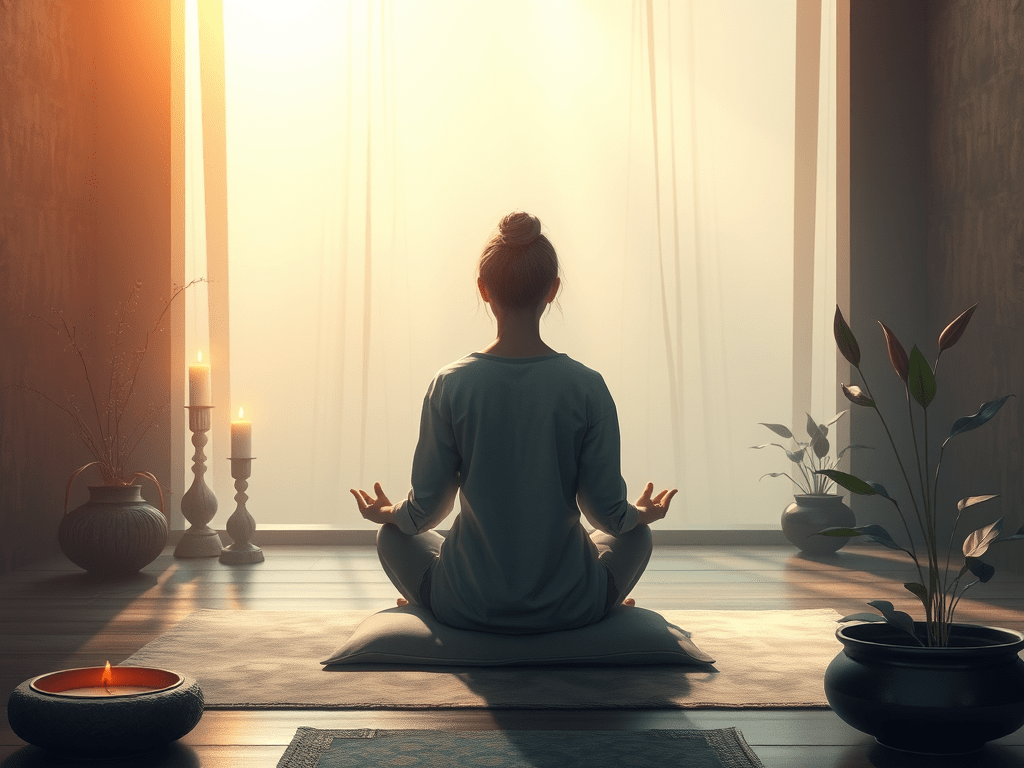
You don’t have to heal everything before you sit.
You don’t have to wait until your trauma is processed or your heart is calm or your life is sorted out.
You can start exactly where it hurts.
In fact, you have to.
Because that’s where the doorway is.
Applied Zen doesn’t ask you to float above your suffering.
It asks you to turn toward it, gently, slowly, breath by breath.
Not to fix it.
Not to reframe it.
Just to stay with it long enough for it to feel less alone.
There were days I sat on the cushion and couldn’t stop crying.
Not because of something new, but because of something old.
Something unspoken.
Something inherited.
Something too big to name and too tired to keep carrying.
And still, I sat.
That was the practice: not leaving myself again.
Zen doesn’t erase pain.
It witnesses it without flinching.
And when pain is witnessed, honestly, without judgment, it begins to soften.
Not disappear.
Not evaporate.
But loosen. Breathe. Begin to move.
You don’t need to be strong to start this practice.
You don’t need to be spiritual.
You don’t need to be ready.
You need only this:
To feel what you feel.
To sit inside the ache.
To let the breath meet the body, even when the body is trembling.
Applied Zen teaches you that the most sacred place to begin isn’t some imagined peak of enlightenment, it’s the exact spot where your suffering lives.
That’s the temple.
That’s the altar.
That’s where the light gets in.
So start where it hurts.
Not as punishment, but as devotion.
You don’t have to rise above your pain.
You just have to sit with it like it belongs, because it does.
And when you do, something holy begins to unfold.
You.
 Enlightened Life Fellowship