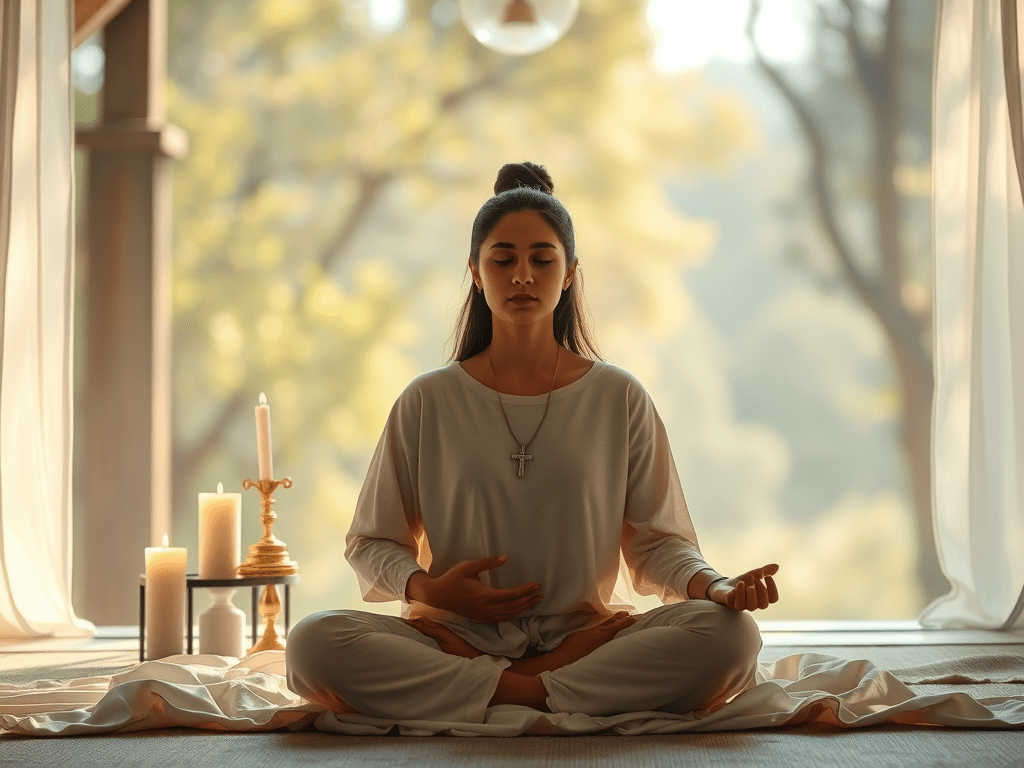
I used to think prayer meant talking, and meditation meant silence.
One was active, the other passive.
One reached out, the other turned inward.
One had words. The other had breath.
But over time, the boundary blurred.
I found myself praying without words.
I found myself meditating with tears in my eyes.
And somewhere in the space between breath and longing, I realized: these are not opposites.
They are the same doorway.
Prayer and meditation are both about contact, with the sacred, with the self, with something deeper than logic. The methods may look different, but the impulse is the same: to be with God.
Sometimes I still pray out loud.
I name names. I ask for help. I plead for peace.
But sometimes, I just sit.
And let the silence pray for me.
Christian Zen taught me that stillness is not a failure to pray, it is the prayer.
Because what if God doesn’t need our words to understand us?
What if God is the space beneath the words?
When I sit in zazen, I don’t stop being Christian.
I stop performing.
I stop trying to earn God’s attention.
And I start receiving it.
Meditation isn’t the opposite of prayer.
It’s what prayer becomes when the mouth closes and the heart takes over.
And when I sit, really sit, what rises isn’t a list of requests. It’s presence. Gratitude. Sorrow. Awareness. A wordless intimacy that feels older than doctrine and deeper than belief.
Sometimes I still start with “Dear God.”
Other times, I just breathe.
And both are holy.
So no, you don’t have to choose.
You can pray with your voice.
You can pray with your breath.
You can meditate on scripture and let it dissolve into silence.
Because silence is not the absence of God.
It’s the place where God whispers.
 Enlightened Life Fellowship