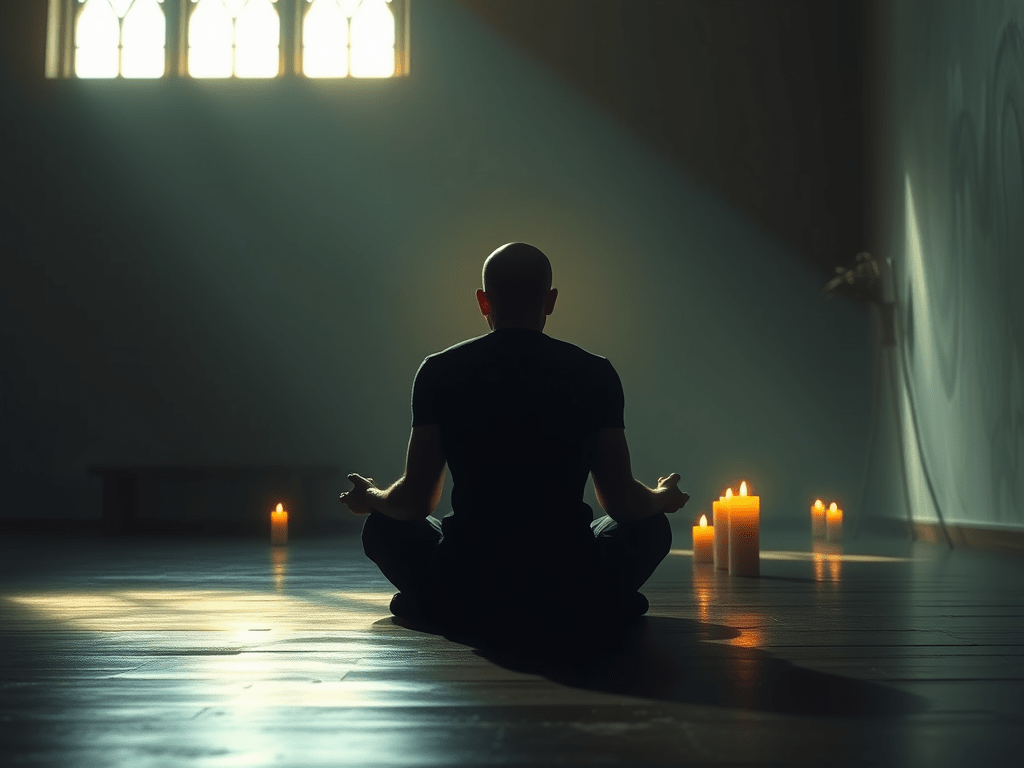
I used to think faith meant having all the answers.
That if I just read enough theology, prayed the right prayers, believed hard enough, I could lock my doubts in a box and throw away the key.
But doubt doesn’t live in boxes.
It shows up in the middle of the night, whispering things you can’t explain away.
It walks into church with you. It sits beside you during worship.
It waits until the room is quiet, then asks: What if none of this is real?
Christian Zen taught me not to fight that voice, but to listen to it differently.
Not with fear.
With presence.
Zen doesn’t care whether you believe in God.
It cares whether you’re awake.
It doesn’t offer answers. It offers attention.
And sometimes, that’s exactly what faith needs.
Because real doubt isn’t the opposite of belief, it’s the beginning of it.
When I sit with my questions instead of running from them, something shifts.
I stop needing proof.
I stop chasing certainty.
And I start being with the not-knowing.
That’s where Christ meets me now, not in the clean logic of apologetics, but in the messy, flickering light of presence.
The resurrected Jesus didn’t shame Thomas for his doubt. He invited him closer. “Touch my wounds,” he said. Not “memorize the right verse.” Not “stop asking questions.” Just: come close enough to feel something true.
That’s what Zen teaches me to do with my doubt.
Not suppress it.
Not argue with it.
But sit close. Breathe with it.
Let it soften instead of harden.
You don’t need to overcome doubt with better arguments.
You overcome it by not abandoning yourself in the middle of it.
You sit.
You stay.
You let presence do what pressure never could, open your heart again.
Faith isn’t a fortress. It’s a fire.
And sometimes doubt is the match.
 Enlightened Life Fellowship