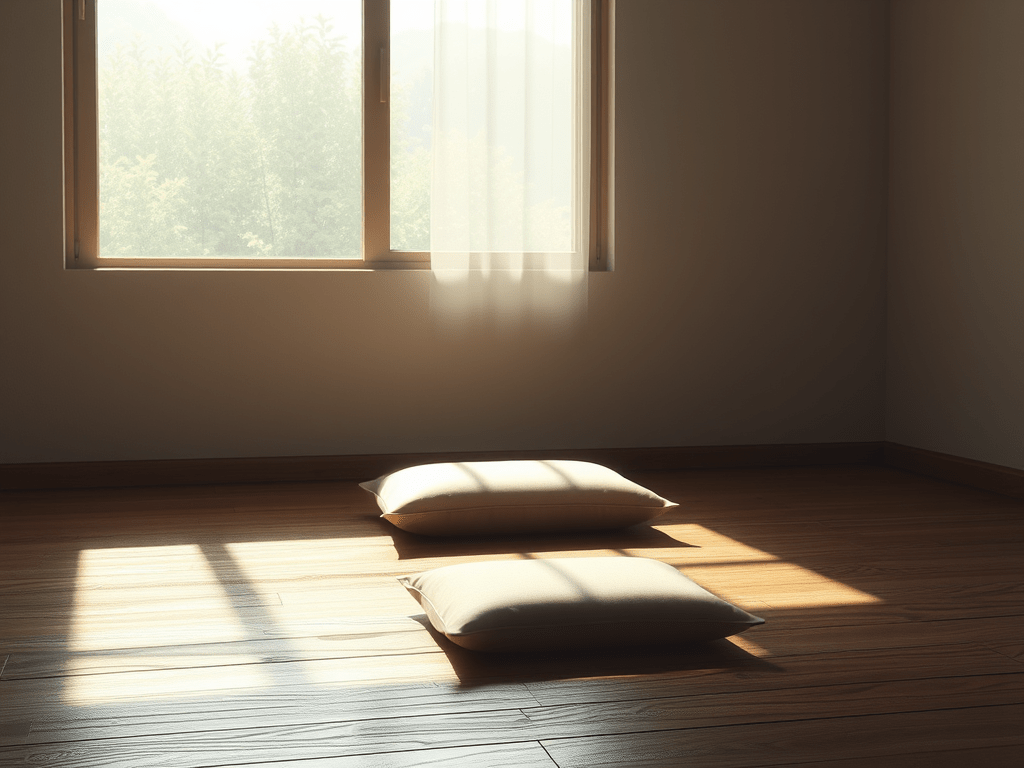
Buddhism begins with a simple truth: suffering exists. Not as a theory. Not as a concept to debate. As a fact. You suffer. I suffer. Everyone you love suffers. Everyone you hate suffers. Everyone who pretends they have it all figured out suffers. The First Noble Truth isn’t offered as bad news. It’s simply naming what’s already here. And that’s where everything starts. Not with escape. Not with denial. With recognition. Suffering exists. We spend most of our lives trying to negotiate with that fact. We try to buy our way out of it. We try to numb it, outrun it, out-think it. But Zen doesn’t offer any of those strategies. Zen isn’t here to help you bypass suffering. Zen asks you to sit down right in the middle of it. Not to fix it. Not to reframe it. Not to decorate it with spiritual language. Just to sit. That’s the part no one wants to hear. Because everything in us wants to move. To fix. To get somewhere. We want a solution. A technique. A five-step plan. Zen doesn’t give you a plan. It gives you a cushion. And the invitation is simple: sit. Stay. Look.
Suffering is not a problem to be solved. It’s a reality to be seen. When you sit in silence long enough, you start to feel the edges of it. The gnawing restlessness. The old grief you thought you buried. The anxiety that hums beneath your breath. The frustration that rises when you realize you can’t control your own thoughts. That’s suffering. Not because you’re failing, but because you’re alive. And that’s exactly where Zen begins. Most of us have been trained to meet suffering with strategies. We label it. We pathologize it. We medicate it. We try to think our way around it. We turn it into content for podcasts and books and workshops on “overcoming adversity.” Zen cuts through all of that. Zen says: stop running. Stop performing. Stop narrating. Just sit here. Feel your chest tighten. Feel your jaw clench. Feel your stomach twist. And stay. Don’t analyze it. Don’t dress it up with clever insights. Don’t turn it into some polished spiritual breakthrough. Just be present inside the rawness of your own existence. The First Noble Truth isn’t cruel. It’s compassionate. Because once you stop trying to negotiate with suffering, you stop fighting reality. And when you stop fighting reality, something unexpected happens. You suffer less. Not because you eliminated pain. But because you stopped resisting what is. That’s the paradox no one tells you about. The less you fight suffering, the softer it becomes. The more you’re willing to simply sit with it, the less control it has over you. It’s not that suffering disappears. It’s that your relationship to it changes. I often hear people say things like, “I want to practice mindfulness so I can manage my stress.” That’s not Zen. Zen isn’t here to help you manage stress. Zen invites you to sit inside stress. To feel the full weight of it without trying to manipulate it into something more pleasant. That’s why this practice isn’t trendy. It’s not sexy. It doesn’t market well. It doesn’t promise you’ll feel amazing in 10 days or less. Zen says: come sit with your fear. Come sit with your heartbreak. Come sit with your confusion. Be fully here for your own pain. Because that is where liberation begins. The First Noble Truth doesn’t stop at “suffering exists.” It points toward something deeper: when you see suffering clearly, when you hold it without flinching, it changes you. Not because you conquered it. Because you saw it. Most of the time, we don’t actually see our suffering. We react to it. We avoid it. We distract ourselves. We tell ourselves stories about why it’s happening or whose fault it is. But Zen invites us to let go of the stories and just witness what’s here. Not as a victim. Not as a hero. Not as a philosopher. Just as a human being sitting in the middle of their own fragile, temporary life. Presence is everything. Zen isn’t about transcendence. It’s about presence. Not floating above your suffering, but standing inside it with both feet on the ground. Looking it in the eye. Breathing with it. That’s the hardest thing for most of us. We don’t want to be fully present for pain. We want to buffer it, soften it, explain it away. But every time we turn away, we deepen our suffering. Freedom comes from turning toward. When I sit, I don’t sit because I’m wise. I sit because I’m human. I sit because I know what it feels like to run. I know what it feels like to want to avoid the ache. I sit to practice staying. Sometimes my mind spins. Sometimes I feel the weight of grief, or fear, or exhaustion rise up like a wave. Sometimes I want to get off the cushion and do anything else. But the practice is simple: stay. Stay with the breath. Stay with the ache. Stay with the tightening in your throat. Stay with the desire to escape. Not to conquer it. Not to transcend it. Just to remain present inside it.
Suffering exists. That’s where Buddhism begins. But it doesn’t end there. Because when you can sit with suffering, something shifts. Not because you forced it. Because you stopped forcing anything. You start to see that suffering is not your enemy. It’s your teacher. It’s pointing you back to this moment. Here. Now. Exactly as it is. And you realize: you don’t have to be afraid of it. You don’t have to solve it. You don’t have to dress it up as spiritual growth. You only have to sit with it. Breathe with it. Hold it gently. Because Zen isn’t about escaping suffering. Zen is about learning how to suffer well.
 Enlightened Life Fellowship